 Skip to main content
Sweet wines often divide opinion.
For some people, they are a rare pleasure — a glass to enjoy at the end of a meal, with dessert or cheese.
For others, they feel heavy, overly rich, or difficult to understand.
But sweet wine is not a single style. It is a whole world of different techniques, grapes and philosophies.
And one of the most expressive ways to understand this world is through Muscat.
What Makes a Wine “Sweet”?
Sweetness in wine comes from natural grape sugars that remain in the wine after fermentation.
But this sweetness can be achieved in many different ways:
- Harvesting very ripe grapes
- Allowing noble rot (botrytis) to concentrate sugars
- Drying grapes before fermentation
- Stopping fermentation early to retain natural sugar
- Fortified styles where alcohol is added to preserve sweetness
Each method creates a different balance between sugar, acidity, alcohol and aroma.
Muscat belongs to a very special category: aromatic sweetness that feels light, fresh and immediate.
Muscat: One of the Oldest Aromatic Grape Families
Muscat is not a single grape variety, but a family of grapes that share one defining characteristic: intense natural aromatics.
It is one of the oldest cultivated grape families in the world, grown across the Mediterranean for centuries.
Muscat is immediately recognisable in the glass.
Even before tasting it, the aroma tells the story.
Typical notes include:
- Fresh grapes
- Orange blossom
- Rose petals
- Honey
- Citrus peel
- Apricot
- Exotic fruits
It is one of the few grape varieties where the smell of the grape itself is already very close to the smell of the wine.
Sweet, but Not Heavy
One of the most important things to understand about Muscat-based sweet wines is this:
Sweet does not necessarily mean heavy.
When well made, Muscat wines are often:
- Light in texture
- Low to medium in alcohol
- Very aromatic
- Fresh and lively
- Easy to drink
The natural perfume of the grape creates an impression of richness, but good winemaking preserves balance and freshness.
This is why Muscat is often one of the most accessible introductions to sweet wine.
Beaumes de Venise – A Classic Expression of Muscat
In the southern Rhône Valley, one of the most famous appellations for sweet Muscat is Muscat de Beaumes de Venise.
Here, the climate is warm and sunny, allowing the grapes to reach full aromatic ripeness while maintaining freshness from careful vineyard management.
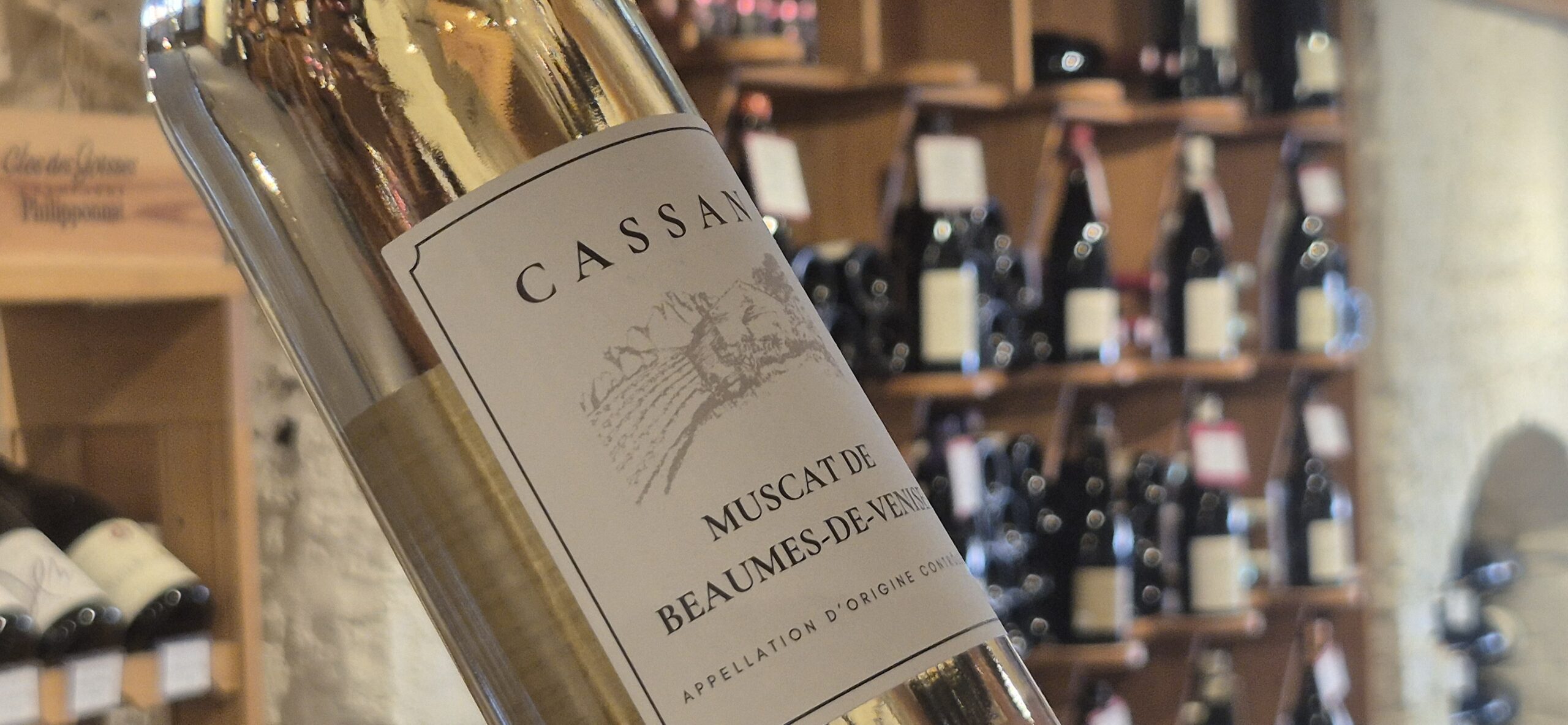
At The French Paradox, we work with Domaine de Cassan, whose Muscat de Beaumes de Venise 2025 is a beautiful example of the style.
It shows exactly what makes Muscat so compelling:
Aromatic intensity without heaviness.
Natural sweetness balanced by freshness.
A wine that is expressive but never overwhelming.
How Sweet Wines Like This Are Made
In the case of Muscat de Beaumes de Venise, the winemaking is designed to preserve both aroma and natural sugar.
Grapes are harvested at optimal ripeness, when aromatic compounds are fully developed.
Fermentation begins, but is stopped before all the sugar is converted into alcohol. This preserves the natural sweetness of the grape while keeping alcohol levels moderate.
The result is a wine that is both sweet and vibrant, rather than heavy or syrupy.
When to Drink Muscat
One of the great strengths of Muscat is its versatility.
It can be enjoyed:
- As an aperitif (well chilled)
- With fruit-based desserts
- With blue cheese or strong cheeses
- With light pastries or citrus desserts
- Simply on its own, at the end of a meal
It is a wine that works both for special occasions and simple moments.
The Final Lesson
Sweet wine is often misunderstood because people think of it as one single category.
But Muscat shows something very different.
It shows that sweetness in wine can come from nature, not just from technique.
It can be aromatic, fresh and light.
And it can be one of the most joyful expressions of wine when it is in balance.
A glass of Muscat de Beaumes de Venise is not about intensity or weight.
It is about perfume, freshness and pleasure.


Recent Comments