 Skip to main content
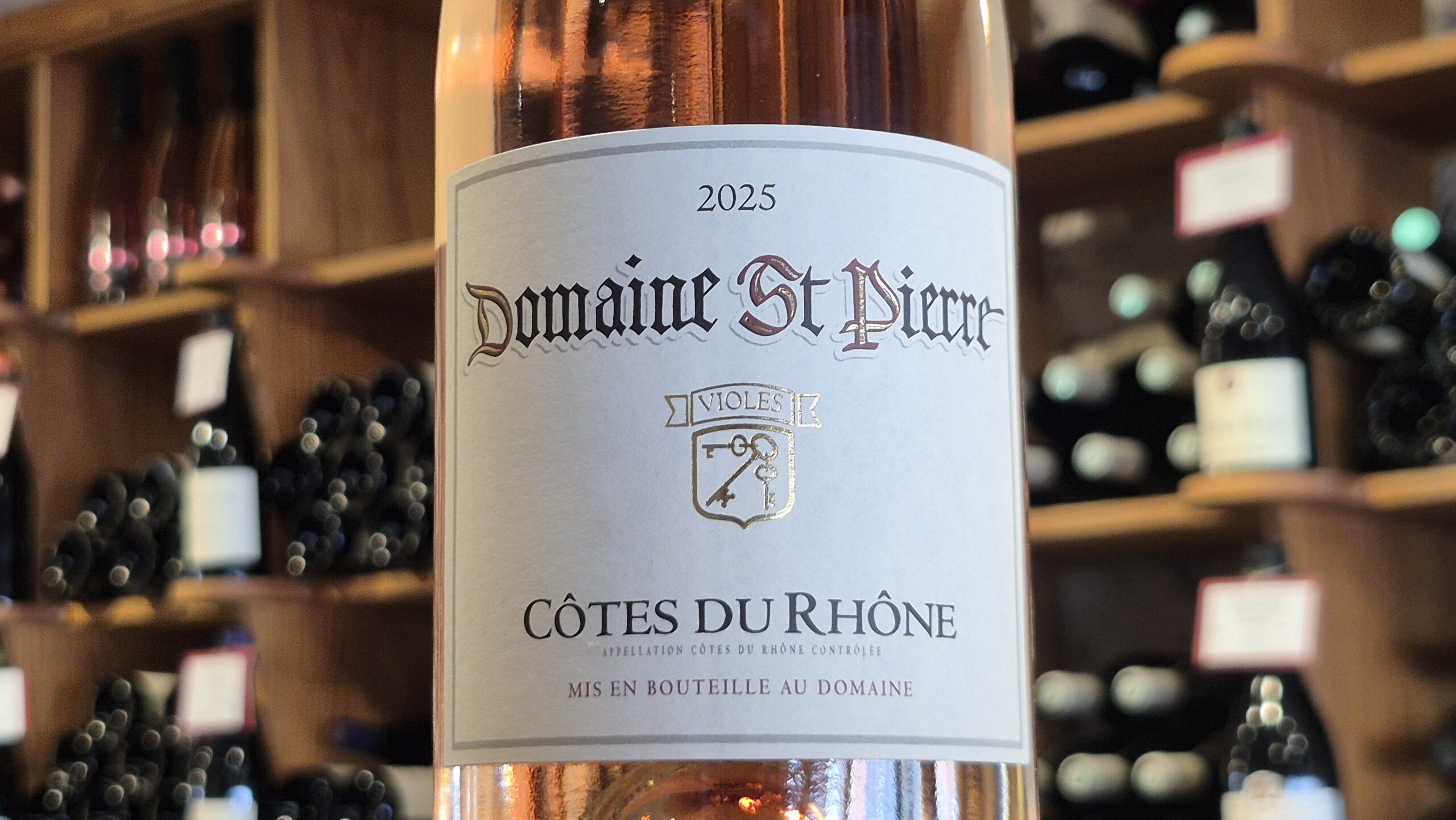
A serious Côtes du Rhône rosé that challenges expectations
When people think of rosé, their minds usually go straight to Provence: pale colours, seaside lunches, and easy summer drinking. But the Rhône Valley tells a different story — deeper, more structured, and often far more surprising.
The Côtes du Rhône Rosé 2025 from Domaine Saint Pierre is exactly that kind of wine. Built on classic Rhône grape varieties and shaped by a demanding Mediterranean climate, it shows that rosé can be serious, textured, and capable of ageing far beyond expectations.
A Rhône terroir shaped by contrast
This rosé comes from vineyards rooted in limestone and clay soils, where vines aged between 20 and 50 years produce naturally concentrated fruit.
Yields are kept at around 50 hl/ha, reflecting a controlled and thoughtful approach to viticulture.
The Mediterranean climate plays a central role in the identity of the wine. With 600 to 800 mm of rainfall per year, more than 100 days of Mistral wind, and long dry summers, the vines are constantly shaped by contrast — wind, sun, and water stress all contributing to balance in the grapes.
In such conditions, the work in the vineyard becomes essential. Domaine Saint Pierre follows integrated agriculture, focusing on careful vine management throughout the growing cycle to ensure healthy and expressive fruit.
A traditional Rhône blend
Unlike the pale, delicate rosés often associated with Provence, this wine is built from classic Rhône red varieties:
Grenache (60%) brings generosity, ripe fruit, and softness.
Carignan (10%) adds freshness and structure.
Syrah (15%) contributes depth, spice, and colour.
Cinsault (15%) provides finesse and aromatic lift.
Together, these varieties create a rosé with real substance — closer in spirit to a light red wine than to a purely delicate summer style.
The saignée method – structure and colour
This rosé is produced using the saignée method, a traditional technique where colour and flavour are extracted after a short period of skin contact.
The grapes are left to macerate for a few hours, allowing the juice to take on both its delicate colour and aromatic profile. This method naturally results in a more structured rosé, with greater depth than direct pressing techniques.
Controlled fermentation for aromatic purity
Fermentation is carried out at carefully controlled temperatures, never exceeding 18°C.
This slow, cool fermentation helps preserve the freshness of the fruit and ensures that the aromatic profile remains clean and expressive. It is a crucial step in maintaining balance between structure and elegance.
A rosé with character and depth
In the glass, the wine shows a more pronounced colour than many modern rosés, hinting at its Rhône identity.
The nose reveals red berries, subtle spice, and soft herbal notes. On the palate, it is structured and textured, with a sense of depth that sets it apart from more delicate styles. The fruit is present but supported by a gentle framework that gives the wine shape and length.
This is not a rosé designed only for immediate refreshment — it is a rosé with presence.
A different face of rosé
The Domaine Saint Pierre 2025 rosé reminds us that this category is far more diverse than its most famous examples.
In the Rhône, rosé can take on structure, complexity, and even ageing potential. It reflects the same terroir and grape varieties that produce the region’s red wines, simply expressed in a lighter, more delicate form.
A rosé that challenges expectations
This is a wine that invites a change of perspective.
Not a pale accessory to summer, but a Rhône wine in its own right — shaped by wind, sun, and carefully tended vines.
The Domaine Saint Pierre rosé 2025 stands as a reminder that even in a familiar category, there is always room for surprise.



Recent Comments