 Skip to main content
A discreet Grand Cru, shaped by time, balance, and the elegance of maturity
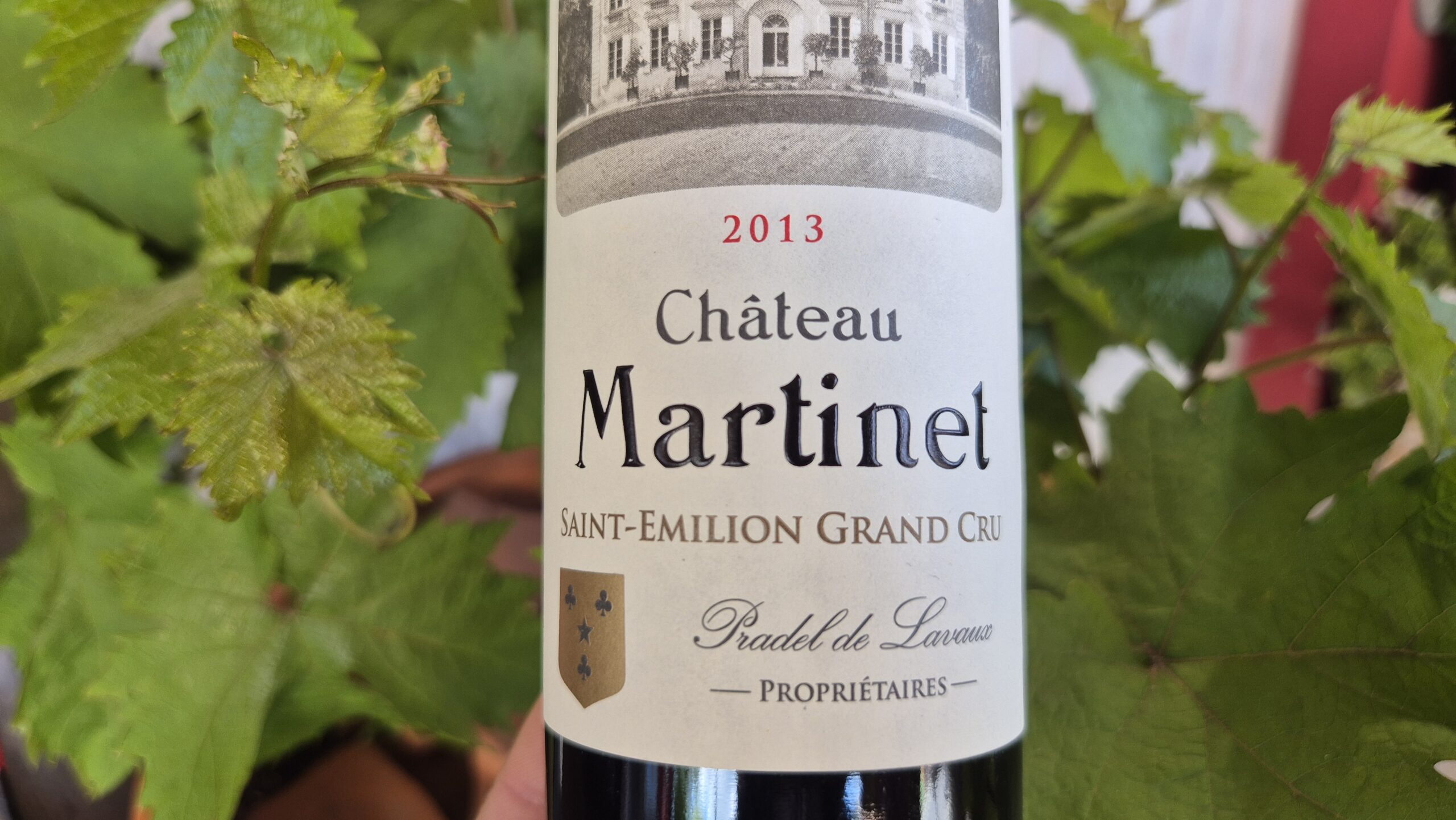
Some wines are made for grand occasions. Others are made for the right moment, even in a smaller format. Château Martinet 2013, a Saint-Émilion Grand Cru from the Pradel de Lavaux family, is one of those wines — understated, refined, and now beautifully evolved.
Presented here in a half bottle (37.5cl), it becomes something even more precise: a perfectly measured expression of mature Bordeaux.
Saint-Émilion – a landscape of softness and structure
The appellation of Saint-Émilion is one of the most historic in Bordeaux, defined by its rolling hills, limestone plateaus, and clay-rich slopes.
Unlike the more rigid structure of the Médoc, Saint-Émilion is a mosaic of terroirs, where wines often show a balance of richness and approachability. The blends are typically built around Merlot, supported by Cabernet Franc and Cabernet Sauvignon, giving wines that combine plush fruit with structure and freshness.
It is an appellation where time plays an essential role — both in the vineyard and in the bottle.
Château Martinet – a family estate with consistency
Château Martinet belongs to the Pradel de Lavaux family, a name also associated with Château La Renaissance in Pomerol. The estate is located on the edge of Saint-Émilion, where gravelly and sandy soils meet the more classical clay-limestone structure of the region.
The style of the estate is rooted in balance. The wines are not overly extracted, nor heavily oaked, but instead aim for a clear expression of fruit, structure, and terroir.
There is a quiet consistency in their work — a focus on producing wines that are honest, accessible, and capable of ageing gracefully.
The 2013 vintage – a classic, understated year
The 2013 vintage in Bordeaux was a challenging one, marked by a cool and uneven growing season. But in Saint-Émilion, careful selection and patient winemaking allowed certain estates to craft wines of finesse and classical structure.
Rather than richness or power, 2013 is defined by freshness, moderate alcohol, and a more traditional Bordeaux profile. With time, these wines have developed charm and drinkability, moving away from primary fruit towards more subtle, evolved aromas.
Château Martinet 2013 fits perfectly into this profile.
A wine in evolution
In the glass, the wine shows a softened, mature character. Red fruit has gently evolved into more savoury notes — dried cherry, plum, subtle spice, and earthy undertones.
The tannins are now fully integrated, giving a smooth, rounded texture. What remains is balance: a wine that is neither heavy nor austere, but composed and harmonious.
It is a style that reflects the strength of Saint-Émilion — the ability of Merlot-based wines to evolve gracefully over time.
The half bottle – a different rhythm
Serving Château Martinet 2013 in a half bottle adds another dimension to the experience.
Smaller formats naturally evolve slightly faster, allowing the wine to reach maturity in a more accessible timeframe. This makes the half bottle particularly well suited to older vintages like 2013, where the evolution is already well underway.
It is also a format that encourages immediacy — perfect for a shared moment between two people, or a focused tasting without excess.
A quiet expression of Bordeaux
Château Martinet 2013 is not a wine that seeks attention. It is a wine that rewards patience, context, and timing.
It shows a more restrained side of Saint-Émilion — one where structure and freshness take precedence over power, and where maturity brings harmony rather than intensity.
A small format, a complete experience
In half bottle format, this Saint-Émilion Grand Cru becomes something particularly engaging: concentrated in experience, yet light in scale.
It is a reminder that great wines are not defined by size, but by expression — and that sometimes, the most satisfying glass is also the most precisely measured.


Recent Comments