 Skip to main content
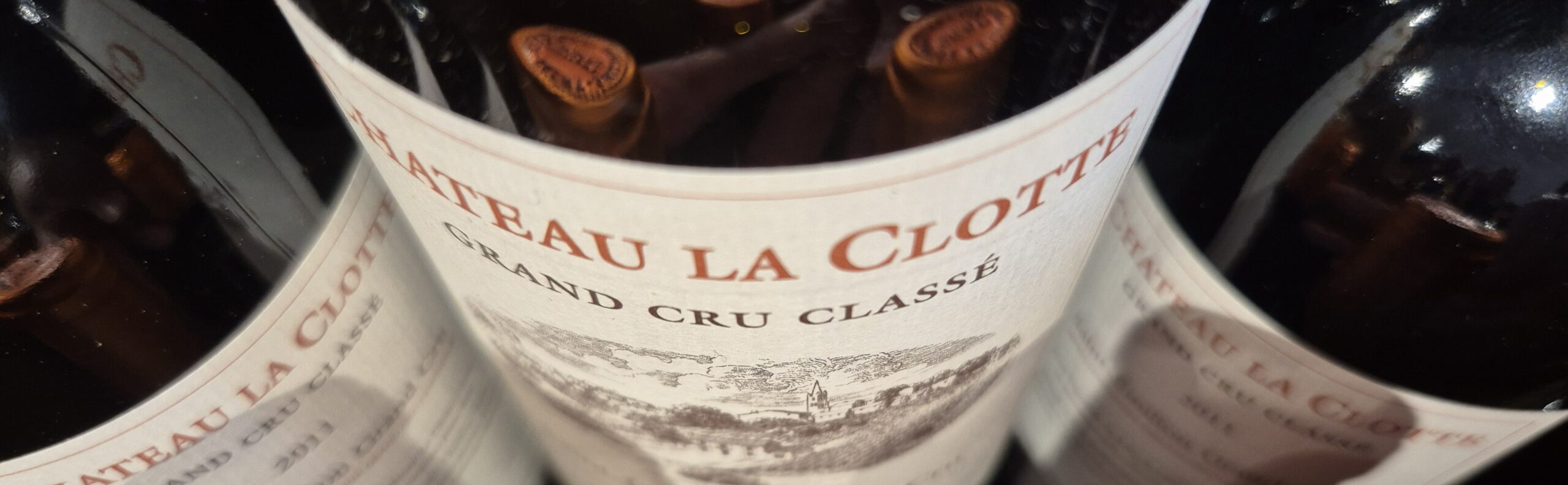
A mature vintage from one of Bordeaux’s most intricate appellations
Some wines are about evolution — the way time shapes structure, softens edges, and reveals new layers. Château La Clotte 2011, a Saint-Émilion Grand Cru, belongs to this category, offering a more mature and nuanced expression of the Right Bank.
At The French Paradox, we are always drawn to wines that show this sense of development — bottles that tell not only the story of a place, but also of time.
Saint-Émilion – a landscape of diversity
Saint-Émilion is one of the most complex appellations in Bordeaux. Unlike the more uniform structure of the Médoc, it is defined by a mosaic of soils — limestone plateaus, clay-rich slopes, and sandy areas — each bringing a different dimension to the wines.
This diversity is reflected in the blends, typically built around Merlot, supported by Cabernet Franc and sometimes Cabernet Sauvignon. Merlot brings roundness and fruit, while Cabernet Franc adds structure, freshness, and aromatic lift.
The result is a style that often feels more immediate and approachable than the Left Bank, yet still capable of ageing with grace.
Understanding the Saint-Émilion classification
Saint-Émilion follows its own classification system, first established in 1955 and revised regularly since then. Unlike the fixed 1855 classification of the Médoc, this system evolves over time, reassessing estates based on quality and consistency.
Within it, wines labelled Saint-Émilion Grand Cru meet stricter production criteria — lower yields, higher ripeness, and longer ageing — though the term should not be confused with the higher tiers of Grand Cru Classé or Premier Grand Cru Classé.
It is, however, a clear indication of ambition and care in both the vineyard and the cellar.
Château La Clotte – a discreet presence
Château La Clotte is one of those estates that does not seek attention, yet delivers wines with quiet consistency. Rooted in the Saint-Émilion landscape, it reflects the appellation’s balance between fruit, structure, and evolution.
There is a sense of restraint in the style — a focus on harmony rather than power — allowing the wine to develop naturally over time.
The 2011 vintage – classic and evolving
The 2011 vintage in Bordeaux is often described as classic rather than opulent. It did not produce the same richness as some of the more celebrated years, but instead offered wines with structure, freshness, and a more traditional profile.
With time, these qualities become particularly interesting. The fruit evolves from primary notes towards more complex aromas, while the tannins soften, creating a more integrated and balanced wine.
In Château La Clotte 2011, this evolution is clearly visible.
A wine shaped by time
Today, the wine shows a more mature expression of Saint-Émilion. The fruit has moved towards darker, slightly dried notes, accompanied by hints of spice, earth, and subtle tertiary aromas.
On the palate, the structure remains, but it has softened, allowing the wine to feel more harmonious and approachable. There is less emphasis on power, more on balance — a wine that invites a slower, more attentive tasting.
A different kind of Bordeaux experience
Château La Clotte 2011 is not about intensity or immediacy. It is about nuance, evolution, and the quiet complexity that comes with age.
It pairs naturally with refined, savoury dishes, but can also be appreciated on its own, as a wine to explore gradually in the glass.
A moment in time
In the end, this wine captures something essential about Bordeaux — not just its structure or its reputation, but its ability to evolve.
It is a reminder that great wines are not only made in the vineyard or the cellar, but also over time. And that sometimes, the most interesting bottles are those that have already begun to tell their story.


Recent Comments