 Skip to main content
Few grape varieties inspire as much fascination as Pinot Noir.
It is one of the most celebrated grapes in the world, responsible for some of France’s greatest wines.
It is also one of the most challenging.
Pinot Noir can be incredibly rewarding, but it is not an easy grape to understand. It is sensitive, delicate and expressive. It does not hide behind power or heavy extraction. Instead, it reveals the place where it grows, the hands that craft it and the decisions made in the cellar.
This is what makes Pinot Noir so captivating.
A Grape That Reveals Everything
Unlike some varieties that naturally produce deep colour, strong tannins and powerful flavours, Pinot Noir is naturally more delicate.
Its thin skins mean that it does not contain the same level of colour and tannin as grapes such as Cabernet Sauvignon or Syrah.
But this is not a weakness.
It is what gives Pinot Noir its incredible elegance.
The grape is known for:
- Red berries
- Cherry
- Raspberry
- Floral notes
- Earthy aromas
- Spice
- Subtle savoury complexity
With age, Pinot Noir can evolve into something even more fascinating, developing aromas of forest floor, dried flowers and more complex secondary notes.
Why Pinot Noir Is So Difficult to Make
Pinot Noir is a grape that requires patience and precision.
Too much extraction can quickly overpower its natural elegance.
During winemaking, the producer must carefully manage the contact between the juice and the grape skins.
This is where maceration becomes essential.
A short and gentle maceration allows the winemaker to extract enough colour, flavour and structure while avoiding excessive tannins.
The goal is not to create a powerful wine.
The goal is to create a balanced wine where the fruit, freshness and texture remain in harmony.
Not All Pinot Noir Tastes the Same
One of the most fascinating things about Pinot Noir is how differently it can express itself depending on where it grows.
In Burgundy, Pinot Noir is often associated with precision, complexity and the expression of individual vineyards.
The concept of terroir is at the heart of Burgundy.
The same grape variety can produce completely different wines depending on the soil, exposure, climate and the work of the producer.
In the Loire Valley, particularly in Sancerre, Pinot Noir takes on another personality.
Often lighter, fresher and more vibrant, it reflects the cooler climate and brings a beautiful energy to the glass.
Different places.
Different styles.
Same incredible grape.
The Role of Oak: Supporting, Not Dominating
Pinot Noir is often aged in oak, especially in Burgundy.
But once again, balance is everything.
Oak should not cover the delicate aromas of the grape.
Instead, it can bring:
- More texture
- Additional complexity
- Greater length
- Subtle spice and toast notes
- More ageing potential
The finest examples use oak as a frame, allowing the personality of the Pinot Noir and the vineyard to remain at the centre.
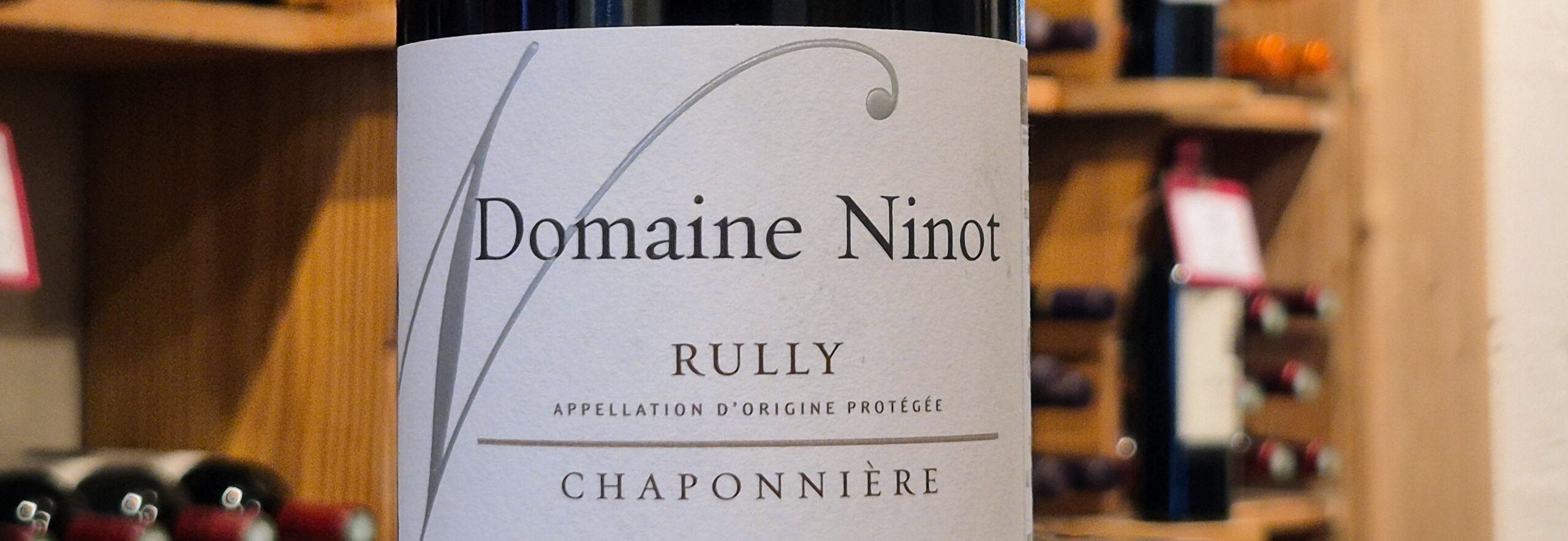
A Beautiful Example: Domaine Ninot Rully “Chaponnière” 2023
Our example for this Masterclass comes from Domaine Ninot, based in Rully, Burgundy.
This wine is a perfect illustration of what makes Pinot Noir so special.
The Chaponnière climat is located close to the domaine, at the foot of the Remenot mountain, on south and south-east facing slopes.
The vineyard is planted on clay-limestone soils, a classic Burgundian combination that brings both richness and freshness.
The vines are cultivated organically, with respect for the life of the soil, and the grapes are harvested by hand to preserve precision and quality.
In the cellar, the approach remains gentle and respectful:
100% Pinot Noir.
Careful extraction.
Short cold maceration.
Native yeasts.
A long, thoughtful fermentation.
The wine is then aged for 12 months in 228-litre oak barrels, with only a small proportion of new oak, allowing the fruit and the terroir to remain the focus.
In the glass, it shows exactly why Pinot Noir is loved by so many wine enthusiasts.
Fresh and generous.
Aromatic and subtle.
Red fruit, cherry and delicate complexity.
The palate is elegant, with a beautiful balance between freshness, texture and fine, crunchy tannins.
It is a wine that can be enjoyed today, but like many great Burgundy wines, it will continue to evolve over several years.
The Final Lesson
Pinot Noir teaches us that greatness does not always come from power.
Sometimes, it comes from precision.
It comes from knowing when to extract, when to protect freshness and when to let the vineyard speak.
Whether from Burgundy, the Loire Valley or elsewhere in the world, Pinot Noir remains one of wine’s most fascinating journeys.
A grape that looks delicate.
A grape that requires patience.
A grape that, when treated with care, can create some of the most memorable wines in the world.


Recent Comments