 Skip to main content
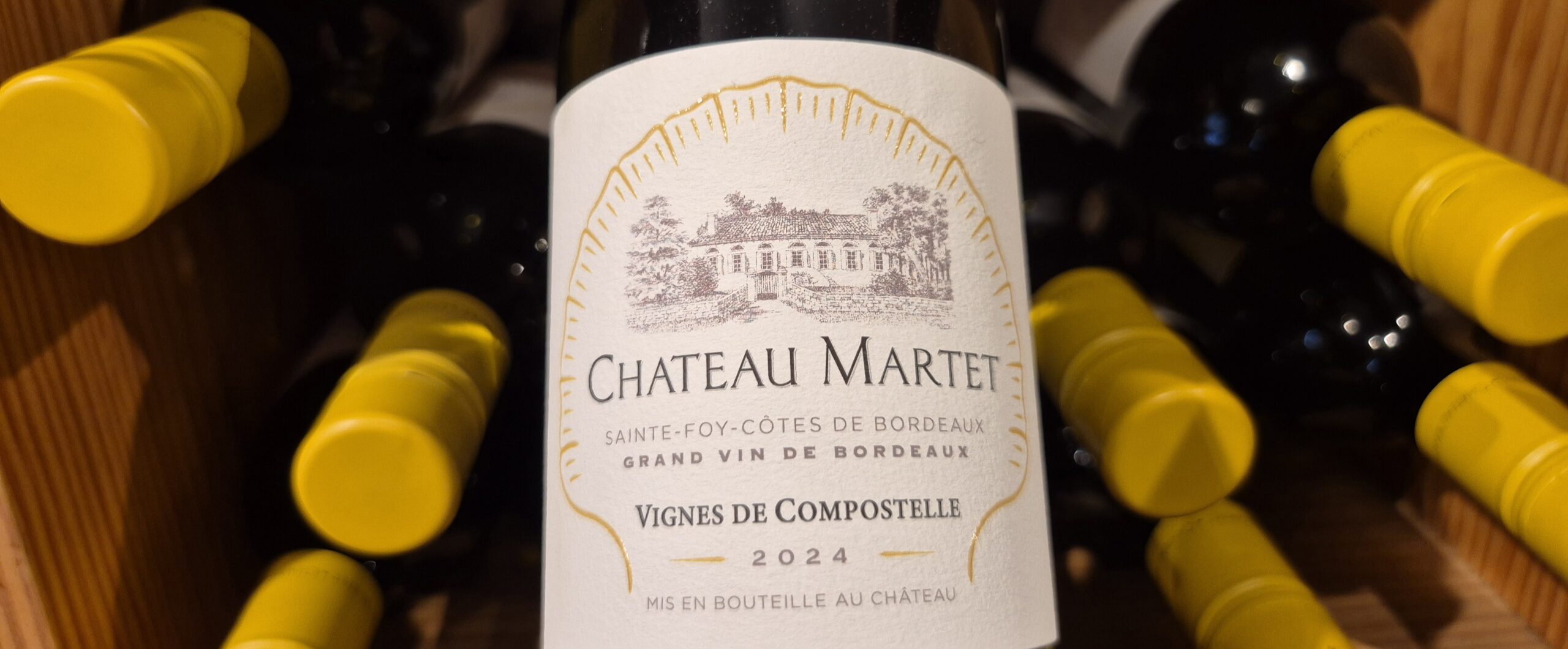
A fresh and expressive white wine that reveals another side of Bordeaux
When thinking of Bordeaux, many immediately picture structured red blends from the Right Bank, especially from areas like Sainte-Foy-Bordeaux and its surrounding hills. Yet behind this reputation for Merlot-driven reds, there is another, quieter story: the rise of elegant, characterful white wines.
Vignes de Compostelle 2024 from Château Martet is a perfect example of this lesser-known expression of Bordeaux — aromatic, balanced, and full of freshness, while still carrying the depth and identity of its terroir.
Château Martet – a historic estate with a living identity
We have already explored Château Martet through its red wines, but the estate reveals another dimension through its whites.
Situated in Sainte-Foy, Château Martet is historically rooted in a landscape better known for Merlot and the classic Bordeaux red blends of the Right Bank. Yet the estate has also embraced white grape varieties, crafting wines that highlight freshness and aromatic detail.
The story of the château itself, linked in the 13th century to the Templars and pilgrims travelling the Camino de Santiago, still resonates today. The scallop shell emblem remains a symbol of hospitality and passage — a fitting image for a wine that feels open, bright, and welcoming.
White Bordeaux – a hidden side of the region
White Bordeaux is often overlooked, but it offers a fascinating diversity of styles. Depending on the blend, it can be crisp and citrus-driven, or richer and more textured, especially when Sémillon plays a central role.
In Vignes de Compostelle, Sémillon brings roundness and a subtle buttery texture, while Sauvignon Blanc adds brightness and aromatic lift. A touch of Sauvignon Gris enhances complexity and depth, while Muscadelle contributes floral nuance and finesse.
Together, these varieties show how white Bordeaux can be both expressive and structured.
A gentle élevage on lees
The wine is aged for four months on fine lees in concrete vats. This gentle ageing method plays an important role in shaping its texture.
Rather than adding oak influence, the lees contact brings subtle roundness and a soft, integrated mouthfeel. The concrete vats preserve purity, allowing the fruit to remain at the forefront while gaining a delicate, creamy touch.
The result is a white wine that feels smooth without heaviness, and fresh without sharp edges.
Vignes de Compostelle 2024 – freshness with subtle richness
In the glass, the wine shows a pale gold colour, immediately suggesting both freshness and a hint of depth.
The nose is expressive, opening on bright orchard fruit — pear, peach, and citrus — with a gentle buttery nuance that remains understated rather than dominant.
On the palate, the wine is smooth and fruity, with a supple texture and a clean, elegant finish. The balance between freshness and roundness makes it immediately enjoyable, while still offering enough structure to accompany food.
A white wine that tells a different Bordeaux story
Vignes de Compostelle is more than just a white Bordeaux — it is a reminder that regions often defined by red wines can also produce whites of real personality.
It reflects a growing movement in Bordeaux toward diversity, where estates like Château Martet explore different expressions of their terroir without losing their identity.
A wine of openness and heritage
With its name rooted in the history of pilgrimage and its style rooted in freshness and balance, Vignes de Compostelle 2024 feels particularly symbolic.
It is a wine that welcomes, that invites sharing, and that quietly expands the idea of what Bordeaux can be.


Recent Comments