 Skip to main content
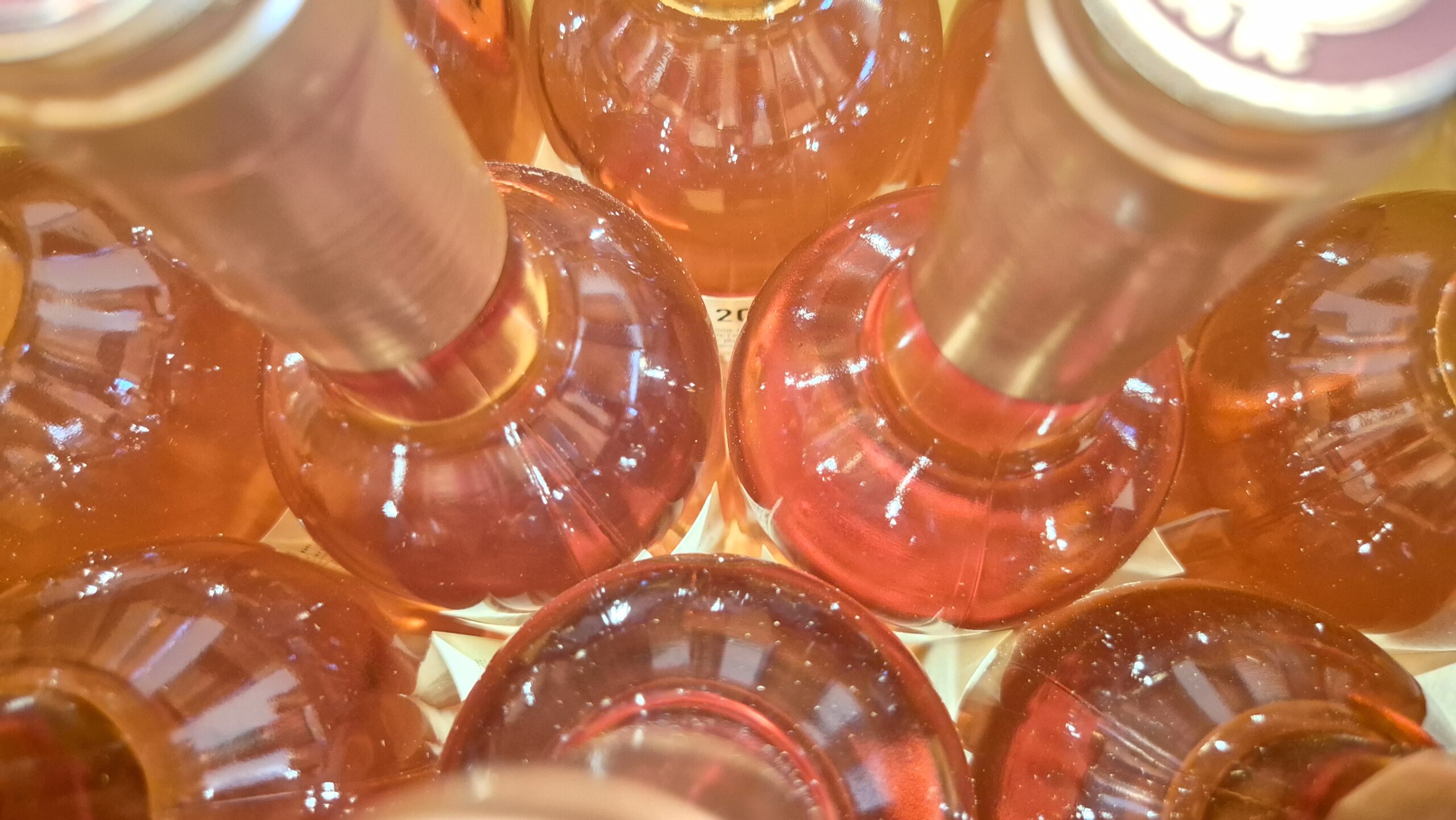
Rosé is often associated with sunny terraces, summer lunches and long evenings with friends. Yet despite its popularity, it remains one of the most misunderstood styles of wine.
One of the questions we hear most often in the shop is simple:
“Is rosé just a mix of red wine and white wine?”
The answer is almost always no.
Rosé occupies a fascinating middle ground between white and red wine. It can be pale or deeply coloured, delicate or powerful, crisp or richly textured. Understanding how rosé is made helps explain why the styles vary so much from one bottle to another.
Where Does the Colour Come From?
The juice of almost all grapes is naturally clear, whether the grapes themselves are white or black.
The colour of a wine comes primarily from the grape skins. During winemaking, the juice is allowed to remain in contact with the skins for a period of time. The longer this contact lasts, the more colour, flavour and tannin are extracted.
For white wines, the skins are usually removed immediately.
For red wines, the skins remain with the juice throughout fermentation, often for days or weeks.
Rosé sits somewhere in between.
The winemaker allows the juice to spend only a short time in contact with the skins—sometimes just a few hours—before separating them. The result is a wine with a beautiful pink colour and a lighter structure than a red wine.
The Main Methods of Producing Rosé
Direct Pressing
This is the most delicate method.
Black grapes are harvested and pressed immediately, much like white grapes. Because the skins remain in contact with the juice for only a very short time, the resulting wine is usually pale in colour, fresh and elegant.
Many of the lightest rosés on the market are made this way.
Short Maceration
In this method, the grapes are left in contact with their skins for several hours before pressing.
The winemaker carefully controls the extraction to achieve the desired colour and style.
This generally produces rosés with more colour, more fruit character and a slightly fuller texture.
Saignée (“Bleeding”)
A less common method, but one that can produce particularly expressive wines.
At the beginning of red wine production, a portion of the juice is removed from the fermentation tank. This lightly coloured juice is then fermented separately as rosé.
The resulting wines are often deeper in colour and more powerful in flavour than rosés produced by direct pressing.
Why Are Some Rosés Pale and Others Dark?
Colour alone does not determine quality.
Several factors influence the final appearance:
- The grape variety
- The length of skin contact
- The winemaking method
- The vintage conditions
- The winemaker’s stylistic choices
A pale rosé is not necessarily lighter in flavour, and a darker rosé is not necessarily sweeter or heavier.
In fact, some of the world’s most gastronomic rosés display a surprisingly deep colour.
Four Rosés, Four Different Expressions
One of the joys of rosé is its diversity. Our current selection illustrates this perfectly.
Escapade Rosé 2024 – Domaine de Beyssac
Made entirely from Malbec, this rosé shows a more generous personality than many people expect. The grape naturally brings colour, ripe fruit and structure, creating a rosé with real character and depth.
Lansade Rosé 2025 – Château de Jonquières
From the Languedoc, this wine reflects the warmth and sunshine of southern France. Mediterranean varieties and a dry climate combine to create a rosé that is expressive, generous and wonderfully suited to outdoor dining.
Sancerre Rosé 2023 – Domaine Fouassier
Produced from Pinot Noir in the Loire Valley, this rosé showcases the elegance for which Sancerre is famous. Refined, fresh and precise, it demonstrates how rosé can be every bit as sophisticated as white wine.
Côtes du Rhône Rosé 2025 – Domaine Saint Pierre
A classic Rhône interpretation, balancing freshness with generous fruit. It is a versatile rosé that works beautifully both as an aperitif and alongside food.
The Final Lesson
Rosé is not one style of wine.
It is a category that encompasses many different grape varieties, climates, winemaking techniques and philosophies.
The next time you pick up a bottle of rosé, don’t focus only on the colour. Consider where it comes from, which grapes were used and how the winemaker chose to craft it.
You may discover that rosé is far more diverse—and far more interesting—than you ever imagined.
Domaine de Beyssac – Côtes du Marmandais Rosé “Escapade” 2024


Recent Comments