 Skip to main content
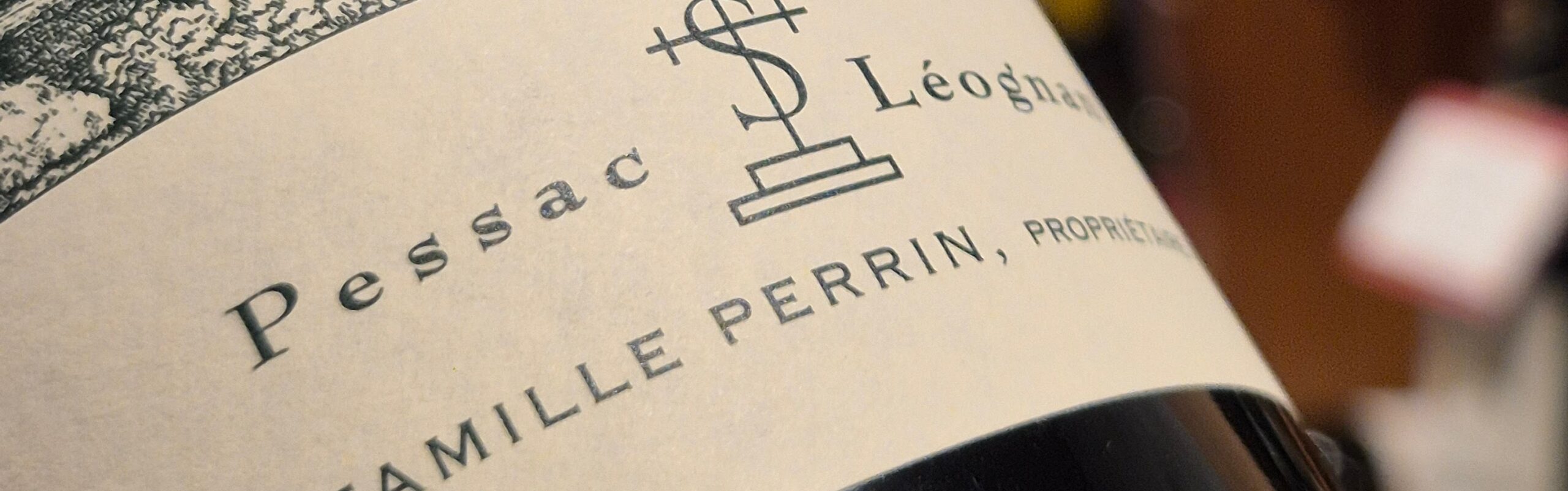
A Grand Cru Classé de Graves from one of Pessac-Léognan’s most historic estates
There are Bordeaux châteaux with long histories.
And then there is Château Carbonnieux.
Its story stretches back almost eight centuries, from medieval vineyards and Benedictine monks to the Perrin family, who have been at the helm for four generations.
Today, Carbonnieux is one of the great names of Pessac-Léognan — and the 2015 vintage gives us a particularly fascinating bottle to open.
A château older than Bordeaux’s modern wine map
The story of Carbonnieux begins in the 13th century, when the name already appeared in connection with vineyards around Léognan.
The estate later came into the hands of the Benedictine monks of Sainte-Croix Abbey in Bordeaux. In the 18th century, they transformed Carbonnieux into an important wine estate, developing both its vineyards and its reputation.
The monks were particularly influential in the history of the estate’s white wines, which became highly regarded far beyond Bordeaux.
It is a remarkable piece of history: long before Pessac-Léognan existed as an appellation, Carbonnieux was already making wine on this land.
A rare double Grand Cru Classé
There is another detail about Carbonnieux that is easy to miss.
In the 1953 Graves classification, the château was recognised as a Grand Cru Classé for both its red and white wines. The classification was revised in 1959, but Carbonnieux retained this double distinction.
It is an unusual position in Bordeaux and reflects something fundamental about the estate.
Carbonnieux is not simply a great white-wine château that also happens to make red.
Its red wine has its own identity and its own place among the classified wines of Graves.
The gravel ridge of Pessac-Léognan
The vineyards sit on a remarkable gravel rise formed by ancient deposits of the Garonne.
Stones, gravel, sand, silt and clay were deposited here over geological time, creating the distinctive soils that give the Graves region its name.
At Carbonnieux, the vineyard is divided into 119 individual plots, each with its own characteristics. The estate maps these soils carefully and matches grape varieties to the parcels where they can perform best.
For the red wine, Cabernet Sauvignon thrives on the deeper gravel soils, while Merlot is planted on a combination of fine gravel and clay. Cabernet Franc and Petit Verdot are found on clay-limestone soils covered with fine gravel.
The result is a Bordeaux blend that is very much rooted in its place.
The magic of 2015
2015 was one of those Bordeaux vintages that producers still talk about with affection.
Carbonnieux itself describes it as the “magic of 5”, joining a series of celebrated Bordeaux vintages ending in five, including 1945, 1955, 1975, 1985, 1995 and 2005.
The growing season provided favourable conditions for ripening, producing wines with depth, structure and the ability to develop with age.
At Carbonnieux, the 2015 red is built around Cabernet Sauvignon, which makes up 60% of the blend, supported by 35% Merlot and 5% Petit Verdot.
The Cabernet brings volume, structure and length. Merlot adds softness and fruit, while Petit Verdot contributes another layer of aromatic complexity.
A Bordeaux that has had time to evolve
The wine was aged for 15 to 18 months in Bordeaux barrels, with 35% new oak.
But the oak is not there to dominate the wine.
Carbonnieux uses slow, gentle extraction during vinification, with the aim of preserving the natural roundness and mineral character of the Pessac-Léognan terroir.
In the glass, the 2015 shows an intense, deep colour tending towards purple. The nose is expressive and fruit-driven, while the palate begins with freshness before developing into a broad, structured tannic frame.
It is the kind of structure that explains why Bordeaux’s great wines are capable of ageing so gracefully.
And now, more than a decade after the vintage, the 2015 has had time to move beyond youthful fruit and begin showing the benefits of maturity.
Why Carbonnieux is such an interesting Bordeaux
Perhaps what makes Carbonnieux particularly fascinating is the combination of things that come together in one bottle.
An estate with medieval origins.
A family that has owned it for four generations.
A vineyard sitting on ancient Garonne gravel.
A classification that recognises both its red and white wines.
And a vintage from a Bordeaux year already remembered for its quality.
None of these things alone tells you what is in the bottle.
Together, they tell you why a wine like Carbonnieux can be so much more than simply “a Bordeaux”.
Why we love it at The French Paradox
There is something very satisfying about opening a mature Bordeaux when the wine has had time to tell its story.
The Château Carbonnieux 2015 has the structure, fruit and depth expected from Pessac-Léognan, but it also carries something that cannot be recreated: eight centuries of history behind the name and a great Bordeaux vintage in the bottle.
It is a classic, certainly.
But sometimes classic is exactly what you want.


Recent Comments